On Monday we continued with rocks and began reviewing for the quiz on Tuesday. This quiz contains information on metamorphic, igneous, and sedimentary rocks. The basic information on the the rocks will be on the quiz but we will not have to identify any specific rocks. Instead on Friday we will have a lab practical where we will have to identify the most common rock types from each formation of rock. To study I used the quizlet on rock vocab. The terms that I often missed were pluton and stock. I would often mix these two up a lot but after a while I figured out how to remember them. One thing I need to improve on when studying for this test is understanding the difference between intrusive and extrusive rocks types and how to tell them apart.
On Tuesday we had our science quiz. For the most part it was challenging but I was able to use my common knowledge of rocks to work through the questions and come up with the best answer. One thing I will need to review for the test is labeling igneous rock formation below the Earth's surface. Some of the rock formations that I mixed up were stock and laccolith. Now I know that the difference between a stock and a lacolith is that a stock is a smaller version of a batholith and a lacolith pushes through the rock layer almost forming a new layer. After the quiz we worked on our sedimentary rock lab that we had started last week.
On Wednesday we got our quizzes back and I was happy to see that I did very well. We went over the commonly missed questions and had a basic overview of the entire quiz. After reviewing the quiz we worked on our sedimentary rocks. This rock lab was the most difficult for me because I did not have a clear understanding of the questions. Most of the questions were very complicated and revolved around the different processes of sedimentary rocks. After the lab we individually reviewed for the lab practical on Friday. The two rocks I usually mixed up were slate and shale. This is because they have similar colors and shale is the parent rock for slate.
On Thursday we continued with learning about rocks. We reviewed the processes of the rock cycle. In the rock cycle any type of rock can go through any of the rock formations. For example igneous rocks can change into sedimentary rocks through weathering and erosion. Weathering can break down rocks through natural proceseses such as acid rain and wind. Acid rain is an example of chemical weathering because the acid content in the rain can break down the minerals of rocks. After reviewing notes we worked on the textbook questions about the rock cycle. Most of the questions were review but some of the questions were about topics we discussed that day. We also had practicing on identifying the rocks for the lab practical on Friday.
On Friday we took our lab practical on rocks. One person went at a time and while we were waiting we studied for our upcoming test and worked on reviewing rocks. The lab practical was like the practice one we reviewed in class but the rock samples were a lot different. The color of the granite samples were very different I could not tell which rock it was at first. Most of the other rocks were similar in color but not in texture. After taking the practical I worked on my study guide for the test next Thursday.
Sunday, December 13, 2015
Sunday, December 6, 2015
Rocks and More
On Monday we continued with learning about rocks. We had previously started a new unit on them before Thanksgiving break but did a little reviewing before class just to make sure that we had a basic understanding. We then began to work on a new lab. This lab will help us learn more about different rock types and how to classify them. A big part in classifying rocks is by the way they are formed. Igneous rocks can be formed by two types of lava felsic or mafic magma. The difference between these two types is that one is more viscous than the other. One of the easiest texture to identify is the glassy rock texture. This rock has very sharp edges and is very shiny like glass. Another really cool rock type is pumice. This rock is very light and has many vesicles. Vesicles are holes that are forms in the rock because of pockets of gas that have formed inside the rocks. Due to all of these holes the rock is very light and can even float on water.
On Tuesday we continued with this lab and after finishing the lab I had a better understanding of intrusive and extrusive rocks. I also learned the slower the lava cools the larger the grains are. This is because they have more time to form. Fine grains are formed when lava is cooled quickly resulting in an extrusive rock. To classify igneous rocks there are categories to help categorize them. Rocks can be classified by texture, color, intrusive, extrusive, minerals, and felsic of mafic. Lighter rocks have a lower density most of the time because they are very high in their silica content. Darker denser rocks, such as obsidian, are heavier because of their higher levels of iron.
On Wednesday we started to learn about metamorphic rocks. Metamorphic rocks are rocks that have been changed in some way from its original parent rock. For example bread changes into toast like metamorphic rock turns into a new form of rock. Metamorphic rocks can be categorized as foliated or non-foliated. Foliated rocks have very distinct layers called bands. After notes we started a new lab on the classification of metamorphic rocks. This was like the igneous rock lab before although I did find naming the rocks a little easier in this lab.
On Thursday we reviewed notes mainly focusing on sedimentary rocks. Sedimentary rocks are formed from ground sediment that comes together over many years. Organic sedimentary rocks form from products from living organisms such as bones and shells. Chemical sedimentary rocks form from precipitates from water. After reviewing notes we started a new lab on sedimentary rocks. I have found sedimentary rocks to be harder to identify than igneous and metamorphic.
On Friday we continued with the sedimentary rock lab. I had a difficult time naming the rocks and that is something I need to improve on especially for the lab practical next week. We also have a quiz next Tuesday on everything we have learned so far with rocks. This lab helped me learn most of the basic concepts with rocks such as how each rock is classified.
On Tuesday we continued with this lab and after finishing the lab I had a better understanding of intrusive and extrusive rocks. I also learned the slower the lava cools the larger the grains are. This is because they have more time to form. Fine grains are formed when lava is cooled quickly resulting in an extrusive rock. To classify igneous rocks there are categories to help categorize them. Rocks can be classified by texture, color, intrusive, extrusive, minerals, and felsic of mafic. Lighter rocks have a lower density most of the time because they are very high in their silica content. Darker denser rocks, such as obsidian, are heavier because of their higher levels of iron.
On Wednesday we started to learn about metamorphic rocks. Metamorphic rocks are rocks that have been changed in some way from its original parent rock. For example bread changes into toast like metamorphic rock turns into a new form of rock. Metamorphic rocks can be categorized as foliated or non-foliated. Foliated rocks have very distinct layers called bands. After notes we started a new lab on the classification of metamorphic rocks. This was like the igneous rock lab before although I did find naming the rocks a little easier in this lab.
On Thursday we reviewed notes mainly focusing on sedimentary rocks. Sedimentary rocks are formed from ground sediment that comes together over many years. Organic sedimentary rocks form from products from living organisms such as bones and shells. Chemical sedimentary rocks form from precipitates from water. After reviewing notes we started a new lab on sedimentary rocks. I have found sedimentary rocks to be harder to identify than igneous and metamorphic.
On Friday we continued with the sedimentary rock lab. I had a difficult time naming the rocks and that is something I need to improve on especially for the lab practical next week. We also have a quiz next Tuesday on everything we have learned so far with rocks. This lab helped me learn most of the basic concepts with rocks such as how each rock is classified.
Sunday, November 15, 2015
Earthquakes
On Monday we started a new lab having to do with earthquakes. This lab like the other one we did last week would help to reinforce the new information we had learned from taking notes. Earthquakes are caused when the plates under the crust move. Sometimes these movements can cause a large impact or a very minimal one. The reason that many earthquakes happen near the Pacific ocean is because that is where most of the plate movement occurs. The purpose of this lab was for us to build a structure out of toothpicks and marshmallows that would still be structurally sound after an earthquake. The earthquake will be simulated with a large sheet of jello that will vibrate back and forth. Our structure was very tall so I don't think it will stay up for very long.
On Tuesday we finished this lab out by testing our structures on sheets of jello. Over night some of the structures loosened up and fell down but ours remained intact. The reason was because as the jello vibrated and moved back and forth the building structure moved with it bouncing back to its original position. My hypothesis from yesterday was proven wrong but if I were to make any improvements on it I would have added more support on the bottom and decreased the height of it as well. The rest of the day we spent working on finishing our labs and since I finished early I worked on my study guide. For the test so far I feel good about the past information that was on the quiz but I need to improve on studying the new information on earthquakes and volcanoes.
On Wednesday we did not have school since it was Veterans Day.
On Thursday we spent most of the class reviewing for our test on Friday. We played a review game as a class. This review game consisted of an answer sheet where we would record our answers. Each set of questions revolved around a different topic and most of the them had to do with the earth's core and plate tectonics. From doing this review game I now know I have to review the different seismic waves such as body and surface waves. I also need to review the process that occur at a mid-ocean ridge and also the effects of plate boundaries. Other than those few topics of focused review I feel good about my knowledge of the test and have definitely improved my studying in advance from last week.
On Friday we took the test and afterward I felt generally good about it. I thought I was well prepared and I studied well in advance. When I saw my grade I was surprised because second guessed my self on some of the multiple choice answers but by using my knowledge I was able to narrow some of the answers down. Overall this week I definitely improved on my test because I did better on my test than quiz.
On Tuesday we finished this lab out by testing our structures on sheets of jello. Over night some of the structures loosened up and fell down but ours remained intact. The reason was because as the jello vibrated and moved back and forth the building structure moved with it bouncing back to its original position. My hypothesis from yesterday was proven wrong but if I were to make any improvements on it I would have added more support on the bottom and decreased the height of it as well. The rest of the day we spent working on finishing our labs and since I finished early I worked on my study guide. For the test so far I feel good about the past information that was on the quiz but I need to improve on studying the new information on earthquakes and volcanoes.
On Wednesday we did not have school since it was Veterans Day.
On Thursday we spent most of the class reviewing for our test on Friday. We played a review game as a class. This review game consisted of an answer sheet where we would record our answers. Each set of questions revolved around a different topic and most of the them had to do with the earth's core and plate tectonics. From doing this review game I now know I have to review the different seismic waves such as body and surface waves. I also need to review the process that occur at a mid-ocean ridge and also the effects of plate boundaries. Other than those few topics of focused review I feel good about my knowledge of the test and have definitely improved my studying in advance from last week.
On Friday we took the test and afterward I felt generally good about it. I thought I was well prepared and I studied well in advance. When I saw my grade I was surprised because second guessed my self on some of the multiple choice answers but by using my knowledge I was able to narrow some of the answers down. Overall this week I definitely improved on my test because I did better on my test than quiz.
Sunday, November 8, 2015
Tectonic Food
On Monday we reviewed for our science quiz on Tuesday. This quiz is on unit 4 which is about plate tectonics. As a class we reviewed for this quiz by playing a review game. The class split into two groups and each person from each side was given a series of questions to answer. If the person got the questions right then they were given the chance to shoot a nerf-gun at the white board that had targets on it with different numbers of points. This helped me review because from hearing the questions I knew which topics I needed to review for the quiz. One topic I needed to review is the occurrences of the mid-ocean ridge. It is a big topic so it is important that I understand it very well.
On Tuesday we took our science quiz. The quiz was easier than I thought it was going to be and I think I may have studied some material that wasn't even on the quiz. After studying I had a better understanding of what happened in the mid-ocean ridge and it also helped a lot with memorizing the vocab. After the quiz we finished our blogs and our only homework was our blog for that day. Overall I think I understood most of the material on the quiz and seeing my feedback will help me study for the test a lot better.
On Wednesday we reviewed questions with the website Kahoot. The questions varied from review from the quiz and questions from the next unit. I missed some of the questions from the next unit but got most of the review questions. After that we finished all the vocab for the whole unit which took up all of the class. One word that you have heard before but most likely not in the context of science is compression. Compression is when rocks are forced together by external forces. Most of the vocab was new words I had never heard before but when going over notes tomorrow I will probably understand it more.
On Thursday we started a new lab. This lab helped reinforce some of the material we had reviewed in class. This involved cake icing, graham crackers, and fruit roll ups. The fruit roll ups represented oceanic crust because it was dense but also thin. The graham crackers represented the continental crust because it was thick but not dense. The icing represented the asthenospere because it is a thick semi-solid. We demonstrated how the different crusts would react with each other in different situations. After the demonstrations we filled the data table in with drawings of what each one looked like and geologic features that would result from them.
On Friday we reviewed notes. one main question from this unit was how has plate tectonics affected evolution, ocean currents and global climate. We discussed this question and found that since Pangaea broke apart, species of animals were isolated from their original continents and had to adapt to their new climate changes which led to biodiversity. This also affects ocean currents because the plate movement disrupts heat currents. The heat changes in the atmosphere because volcanic eruption emit sulfur which decreases the harm of uv rays and can decrease the overall temperature. After notes we finished our lab questions about plate tectonics. This week I improved on my study habits but I still need to keep working hard.
On Tuesday we took our science quiz. The quiz was easier than I thought it was going to be and I think I may have studied some material that wasn't even on the quiz. After studying I had a better understanding of what happened in the mid-ocean ridge and it also helped a lot with memorizing the vocab. After the quiz we finished our blogs and our only homework was our blog for that day. Overall I think I understood most of the material on the quiz and seeing my feedback will help me study for the test a lot better.
On Wednesday we reviewed questions with the website Kahoot. The questions varied from review from the quiz and questions from the next unit. I missed some of the questions from the next unit but got most of the review questions. After that we finished all the vocab for the whole unit which took up all of the class. One word that you have heard before but most likely not in the context of science is compression. Compression is when rocks are forced together by external forces. Most of the vocab was new words I had never heard before but when going over notes tomorrow I will probably understand it more.
On Thursday we started a new lab. This lab helped reinforce some of the material we had reviewed in class. This involved cake icing, graham crackers, and fruit roll ups. The fruit roll ups represented oceanic crust because it was dense but also thin. The graham crackers represented the continental crust because it was thick but not dense. The icing represented the asthenospere because it is a thick semi-solid. We demonstrated how the different crusts would react with each other in different situations. After the demonstrations we filled the data table in with drawings of what each one looked like and geologic features that would result from them.
On Friday we reviewed notes. one main question from this unit was how has plate tectonics affected evolution, ocean currents and global climate. We discussed this question and found that since Pangaea broke apart, species of animals were isolated from their original continents and had to adapt to their new climate changes which led to biodiversity. This also affects ocean currents because the plate movement disrupts heat currents. The heat changes in the atmosphere because volcanic eruption emit sulfur which decreases the harm of uv rays and can decrease the overall temperature. After notes we finished our lab questions about plate tectonics. This week I improved on my study habits but I still need to keep working hard.
Sunday, November 1, 2015
Continent Drift
On Monday we finished our Continental drift activity. We did this activity to learn about the Continental drift theory since we cannot really do a lab on the Continental drift. In this lab we learned about a scientist from the early 19th century named Alfred Wegener. During his lifetime he created the earliest reasoning of Pangaea and Continental drift. Although people in his lifetime thought he was crazy, we now regard him as a genius. Some of his reasoning behind this was that the continents fit together almost like a puzzle. This implies that the continents were formed together and some how moved away from each other. His evidence also came from the fact that there were fossils of plants and animals that lived in tropical climates found in glaciers. He reasoned an idea for the large land land mass which is what we know as Pangaea.
On Tuesday we did yet another activity involving the Continental drift theory. In this lab were instructed to create a model of what Pangaea might have looked like. We first color coded each physical feature such as mountains and rivers. We then cut out each continent. Then like constructing a puzzle we fit the continents together by their land features and shapes that corresponded with each other. After it was all put together we could see how each continent's physical features and land edges matched up and created one super continent. Matching these up really helped show on a visual level how each continent connected. After doing this part of the lab I can see why Wegener had the theory that he did.
On Wednesday we finished this lab. The last activity we did on this lab was a model of the oceanic crust and the occurrences that happen there. We cut three slits in a paper and each slit represented an important feature in the oceanic crust. The center slit represented the mid-ocean ridge and the two outer slits represented subduction zones. Slips of paper slid in and out of the slits to represent magma. The paper coming from the mid-ocean ridge was magma coming up and hardening into crust. The paper coming out of the two subduction zones came out of the bottom and represented continental crust being recycled back into the mantle. This model helped me have a better understanding of what really happens in the oceanic crust because understanding this is something I need to improve on.
On Thursday we reviewed for our quiz by doing textbook questions and short answer practice questions. After doing the questions I now know that I need to review the layers of the earth. Specifically the parts of the mantle such as the asthenosphere and the mesosphere. The asthenosphere is review but the mesosphere is a new layer we are just learning about. After that I worked on short answer questions. I wrote my answers in the comments section but I was not signed in, so my work did not save. I was sad that this happened but I got enough practice in for the quiz even though they were not submitted.
On Tuesday we did yet another activity involving the Continental drift theory. In this lab were instructed to create a model of what Pangaea might have looked like. We first color coded each physical feature such as mountains and rivers. We then cut out each continent. Then like constructing a puzzle we fit the continents together by their land features and shapes that corresponded with each other. After it was all put together we could see how each continent's physical features and land edges matched up and created one super continent. Matching these up really helped show on a visual level how each continent connected. After doing this part of the lab I can see why Wegener had the theory that he did.
On Wednesday we finished this lab. The last activity we did on this lab was a model of the oceanic crust and the occurrences that happen there. We cut three slits in a paper and each slit represented an important feature in the oceanic crust. The center slit represented the mid-ocean ridge and the two outer slits represented subduction zones. Slips of paper slid in and out of the slits to represent magma. The paper coming from the mid-ocean ridge was magma coming up and hardening into crust. The paper coming out of the two subduction zones came out of the bottom and represented continental crust being recycled back into the mantle. This model helped me have a better understanding of what really happens in the oceanic crust because understanding this is something I need to improve on.
On Thursday we reviewed for our quiz by doing textbook questions and short answer practice questions. After doing the questions I now know that I need to review the layers of the earth. Specifically the parts of the mantle such as the asthenosphere and the mesosphere. The asthenosphere is review but the mesosphere is a new layer we are just learning about. After that I worked on short answer questions. I wrote my answers in the comments section but I was not signed in, so my work did not save. I was sad that this happened but I got enough practice in for the quiz even though they were not submitted.
Sunday, October 25, 2015
New Unit
On Monday we did not have school because it was a teacher workday.
On Tuesday we reviewed our test we took on Friday. I did very well and only missed one question. I definitely would not have missed it if i had read it carefully. This is definitely something I can improve on. Since we were starting a new quarter, we cleaned out our binders. After cleaning them out I then realized that I am going to have a lot of information to study for my midterm. We have also started a new unit on plate tectonics. This unit will have lots of vocab from the unit about the earth's core because that is what forms the earth's plates. After that we started a new science starter. Then we continued to work on our Eco-science lab. This was our last day of data collection and all of our plants had died. This was probably because there was a large decrease in temperature over the weekend. After eight days of growing we threw the plants in the garbage which in my opinion was not very eco-friendly.
On Wednesday we spent most of the class time working on our Eco-bottle lab. We worked on our conclusion and discussion questions. When writing any conclusion it is important to use your hypothesis and tell whether it was correct or incorrect. From this week I need to improve on constructing a conclusion so I am glad this lab will give me lots of practice.
On Thursday we officially started to discuss unit 4. First we started out the unit by taking new note cards. One word that really stuck with me was magma. I had heard this word before but never really understood what it meant. In case you heard this word mentioned and did not know what it means, it is a lava like substance but instead of it being on top of the earth it lies below the volcano. We also went over some basic information about the earth's crust to get us ready for plate tectonics. One thing we had slightly covered in past units was the ocean crust and the continental crust. The continental is denser under mountains because of the pressure applied from the mountains. After starting notes we worked on finishing our Eco-bottle lab. Today we traded labs with other groups and evaluated other group's work. For the most part, our lab did not have many corrections just some technical errors that we can easily fix.
On Friday we finished the week with a cool activity. Okay it was not as cool as an explosion but it was better than a pop quiz or worksheet. We started the class by adding more note cards to our collection. The new vocab really helped me understand how the earth is made up and how the plates move. After vocab we reviewed our notes and learned how some early scientists reasoned how the continents move apart from each other each year. This theory is called continental drift. After notes we did an activity that we will finish on Monday. this activity was very hands on and allowed us to do some real thinking.
Overall this week has been great and went by a lot faster than I had anticipated.
On Tuesday we reviewed our test we took on Friday. I did very well and only missed one question. I definitely would not have missed it if i had read it carefully. This is definitely something I can improve on. Since we were starting a new quarter, we cleaned out our binders. After cleaning them out I then realized that I am going to have a lot of information to study for my midterm. We have also started a new unit on plate tectonics. This unit will have lots of vocab from the unit about the earth's core because that is what forms the earth's plates. After that we started a new science starter. Then we continued to work on our Eco-science lab. This was our last day of data collection and all of our plants had died. This was probably because there was a large decrease in temperature over the weekend. After eight days of growing we threw the plants in the garbage which in my opinion was not very eco-friendly.
On Wednesday we spent most of the class time working on our Eco-bottle lab. We worked on our conclusion and discussion questions. When writing any conclusion it is important to use your hypothesis and tell whether it was correct or incorrect. From this week I need to improve on constructing a conclusion so I am glad this lab will give me lots of practice.
On Thursday we officially started to discuss unit 4. First we started out the unit by taking new note cards. One word that really stuck with me was magma. I had heard this word before but never really understood what it meant. In case you heard this word mentioned and did not know what it means, it is a lava like substance but instead of it being on top of the earth it lies below the volcano. We also went over some basic information about the earth's crust to get us ready for plate tectonics. One thing we had slightly covered in past units was the ocean crust and the continental crust. The continental is denser under mountains because of the pressure applied from the mountains. After starting notes we worked on finishing our Eco-bottle lab. Today we traded labs with other groups and evaluated other group's work. For the most part, our lab did not have many corrections just some technical errors that we can easily fix.
On Friday we finished the week with a cool activity. Okay it was not as cool as an explosion but it was better than a pop quiz or worksheet. We started the class by adding more note cards to our collection. The new vocab really helped me understand how the earth is made up and how the plates move. After vocab we reviewed our notes and learned how some early scientists reasoned how the continents move apart from each other each year. This theory is called continental drift. After notes we did an activity that we will finish on Monday. this activity was very hands on and allowed us to do some real thinking.
Overall this week has been great and went by a lot faster than I had anticipated.
Sunday, October 18, 2015
Dead Plants and a Test
On Monday we took more data from our plants and our group was on day four of collecting data but the plants had been growing for much longer. Since we were not there to water the plants over the weekend the plants began to wilt. Also since they have been moved to the green house they did not grow as much. While each group was taking data we also reviewed notes. One thing I learned was some ways that carbon is returned to the atmosphere. One way is the burning of fossil fuels. Since humans are burning a lot more fossils, increased levels of carbon dioxide are occurring. One thing I can do to study for my test is review the discovery education question and notes.
On Tuesday we reviewed in class by taking a survey of questions to see what we knew. This helped me a lot because it helped me know which note cards I need to review. Two words I often mix up are Convection and Conduction. I know from reviewing that convection is heat moving through a liquid. After that we started a new lab to help demonstrate the carbon cycle. As a group we would have a total of eight tests and each group was assigned to do one question. The question our group had to answer was, "do plants do cellular respiration in the light?" My hypothesis is no, because plants need sunlight to perform photosynthesis so since they have sunlight they will have a way to make food. Our group set up our trials and then will wait until tomorrow to get our results. After that we learned how to set up a graph in spreadsheets to better and more neatly display our data. It was definitely a challenge but easy when we got the hang of it. After that we took the data for day 5 of our plants. Our plants still seem to be wilted but so did everyone else.
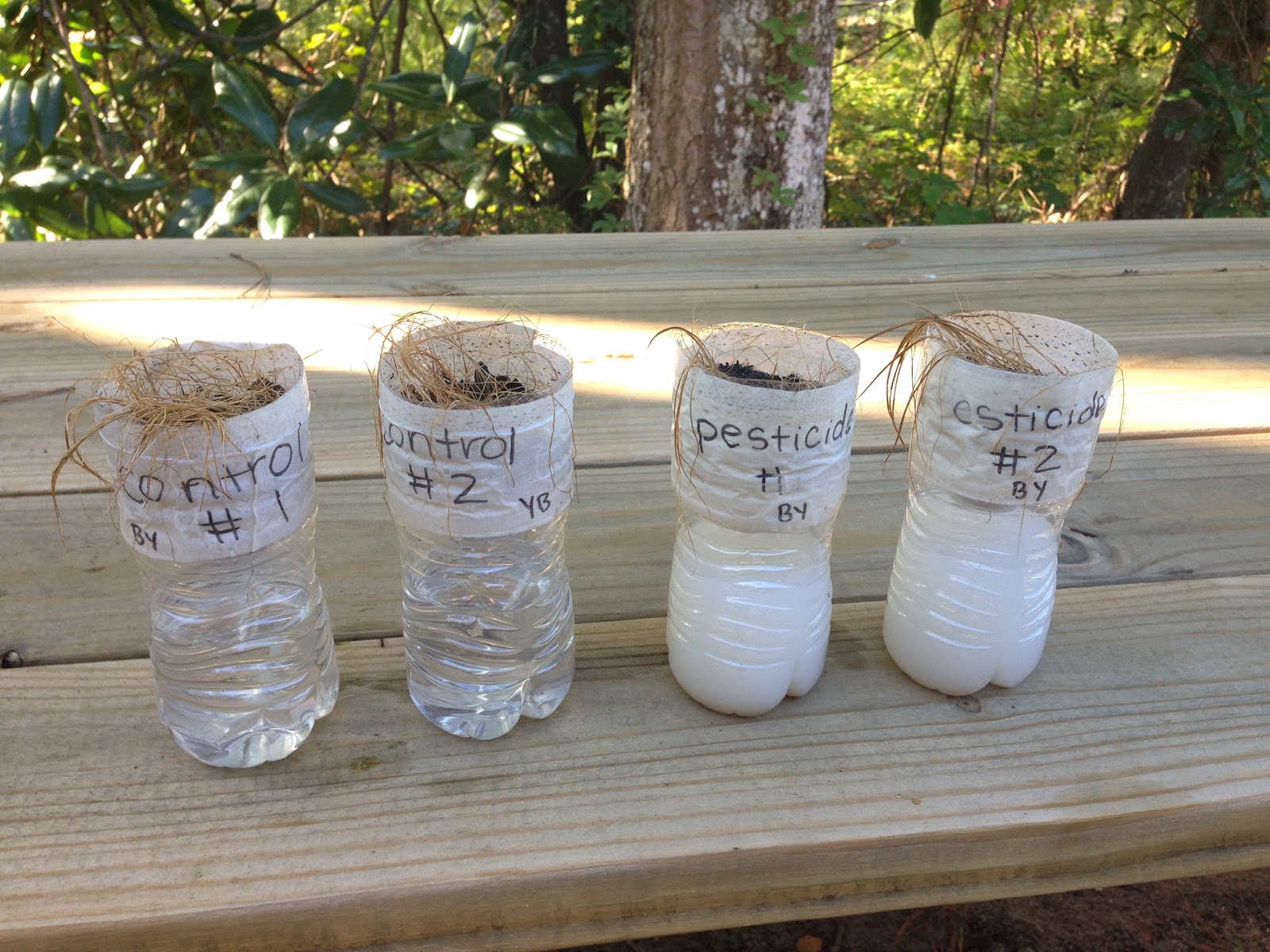
On Wednesday we finished collecting data for our carbon cycle lab. In the is lab we found that when plants undergo cellular respiration they produce carbon and take in oxygen but when they undergo photosynthesis they produce oxygen but take in carbon. We know this because the indicator turned green when there was carbon but turned blue when there was oxygen. The plants in the light turned blue but the plants in the dark turned green. From this lab I learned that plants are a main contributor to the carbon cycle. After that we finished setting up our graphs with our data for our plant data. We then took data for our plants for day 5. Our plants do not look as healthy as they did and the pesticide is making the water very cloudy in the bottom of our bottles. On Friday we will take our test and it will also be the last day of data we take.
On Thursday we took data from our plants on day 6. Most of our plants were dead except for one of our control plants. Although we have not completed all our data my prediction for our plants is that that they will just continue to die and wilt. I think this was their predetermined fate from the beginning.Along with taking plant data we also prepared for our test on Friday. We did this by reviewing our study guide in class. This really helped me a lot because the students who did their study guide had an opportunity to ask questions in class and go over notes. Overall one thing I can improve is studying. Using the discovery education questions is a great way but I definitely need to study the questions about the earth's axis.
On Friday we had our test. This test was a lot easier in my opinion than the quiz. I felt much more prepared for the test and was able to retain the information better when studying during the course of a week. I think quizzes are a lot harder than tests because there is less possible points so if you mess up then it affects your grade much more. After the test we also took plant data and my prediction was right, our plants are dead. I feel bad for this poor grass, I sure wouldn't want to be sprayed with chemicals and then get malnourished. Overall this week has been a busy one and I am glad it is over.
On Tuesday we reviewed in class by taking a survey of questions to see what we knew. This helped me a lot because it helped me know which note cards I need to review. Two words I often mix up are Convection and Conduction. I know from reviewing that convection is heat moving through a liquid. After that we started a new lab to help demonstrate the carbon cycle. As a group we would have a total of eight tests and each group was assigned to do one question. The question our group had to answer was, "do plants do cellular respiration in the light?" My hypothesis is no, because plants need sunlight to perform photosynthesis so since they have sunlight they will have a way to make food. Our group set up our trials and then will wait until tomorrow to get our results. After that we learned how to set up a graph in spreadsheets to better and more neatly display our data. It was definitely a challenge but easy when we got the hang of it. After that we took the data for day 5 of our plants. Our plants still seem to be wilted but so did everyone else.
On Wednesday we finished collecting data for our carbon cycle lab. In the is lab we found that when plants undergo cellular respiration they produce carbon and take in oxygen but when they undergo photosynthesis they produce oxygen but take in carbon. We know this because the indicator turned green when there was carbon but turned blue when there was oxygen. The plants in the light turned blue but the plants in the dark turned green. From this lab I learned that plants are a main contributor to the carbon cycle. After that we finished setting up our graphs with our data for our plant data. We then took data for our plants for day 5. Our plants do not look as healthy as they did and the pesticide is making the water very cloudy in the bottom of our bottles. On Friday we will take our test and it will also be the last day of data we take.
On Thursday we took data from our plants on day 6. Most of our plants were dead except for one of our control plants. Although we have not completed all our data my prediction for our plants is that that they will just continue to die and wilt. I think this was their predetermined fate from the beginning.Along with taking plant data we also prepared for our test on Friday. We did this by reviewing our study guide in class. This really helped me a lot because the students who did their study guide had an opportunity to ask questions in class and go over notes. Overall one thing I can improve is studying. Using the discovery education questions is a great way but I definitely need to study the questions about the earth's axis.
On Friday we had our test. This test was a lot easier in my opinion than the quiz. I felt much more prepared for the test and was able to retain the information better when studying during the course of a week. I think quizzes are a lot harder than tests because there is less possible points so if you mess up then it affects your grade much more. After the test we also took plant data and my prediction was right, our plants are dead. I feel bad for this poor grass, I sure wouldn't want to be sprayed with chemicals and then get malnourished. Overall this week has been a busy one and I am glad it is over.
Subscribe to:
Posts (Atom)